I can't even recall how many times my dad would tell me: "Get with the Program!"
or something like, "It's all part of the Program!"
What we 'accept' as programming becomes our realities.
In the below video Part 2 of 9, Bruce Lipton speaks with Joe Rogan about consciousness and the effects it may have on the reality we perceive.
At about the 6:17 mark, Bruce Lipton dives in to the "programming" concept:
Programming References / Quotes:
"Give me a Child until he is 6 or 7 and he will belong to the Church for the rest of their lives." Jesuit People
I also read the book Bruce Lipton references, Rich Dad, Poor Dad:
“If you realize that you're the problem, then you can change yourself,
learn something and grow wiser. Don't blame other people for your
problems.”
―
Robert T. Kiyosaki,
Rich Dad, Poor Dad
Showing posts with label movement. Show all posts
Showing posts with label movement. Show all posts
4/25/2013


The African Monkey with a Diamond - Searching for the Truth
Joe Rogan on Materialism and Technology --> a TRUTH conversation.
And the timing was impeccable... I understood what he was talking about when he spoke of the YUGA CYCLE since I just finished watching (the YUGA CYCLE is explained at about 22 minutes in):
3/26/2013
Pretty by Katie Makkai - Poetry Slam 2002
To my daughters and to all girls out there:
“Mom, will I be pretty? Will I be pretty?” I will wipe that question from your mouth like cheap lipstick and answer, “No! The word pretty is unworthy of everything you will be, and no child of mine will be contained in five letters.
The Priceless Truth - thank you Katie Makkai for being a VOICE and LIGHT shining Truth upon people living conformity (camouflaged in everyday influence). Thank you!
Katie Makkai, a veteran poetry slammer - defining the word "pretty".
National Poetry Slam 2002 [Team Denver, CO]
Transcript:
“Will I be wanted? Worthy? Pretty?” But puberty left me this funhouse mirror dryad: teeth set at science fiction angles, crooked nose, face donkey-long and pox-marked where the hormones went finger-painting. My poor mother.
“How could this happen? You'll have porcelain skin as soon as we can see a dermatologist. You sucked your thumb. That's why your teeth look like that! You were hit in the face with a Frisbee when you were 6. Otherwise your nose would have been just fine!
“Don't worry. We'll get it fixed!” She would say, grasping my face, twisting it this way and that, as if it were a cabbage she might buy.
But this is not about her. Not her fault. She, too, was raised to believe the greatest asset she could bestow upon her awkward little girl was a marketable facade. By 16, I was pickled with ointments, medications, peroxides. Teeth corralled into steel prongs. Laying in a hospital bed, face packed with gauze, cushioning the brand new nose the surgeon had carved.
Belly gorged on 2 pints of my blood I had swallowed under anesthesia, and every convulsive twist of my gut like my body screaming at me from the inside out, “What did you let them do to you!”
All the while this never-ending chorus droning on and on, like the IV needle dripping liquid beauty into my blood. “Will I be pretty? Will I be pretty? Like my mother, unwrapping the gift wrap to reveal the bouquet of daughter her $10,000 bought her? Pretty? Pretty.”
And now, I have not seen my own face for 10 years. I have not seen my own face in 10 years, but this is not about me.
This is about the self-mutilating circus we have painted ourselves clowns in. About women who will prowl 30 stores in 6 malls to find the right cocktail dress, but haven't a clue where to find fulfillment or how wear joy, wandering through life shackled to a shopping bag, beneath those 2 pretty syllables.
About men wallowing on bar stools, drearily practicing attraction and everyone who will drift home tonight, crest-fallen because not enough strangers found you suitably fuckable.
This, this is about my own some-day daughter. When you approach me, already stung-stayed with insecurity, begging, “Mom, will I be pretty? Will I be pretty?” I will wipe that question from your mouth like cheap lipstick and answer, “No! The word pretty is unworthy of everything you will be, and no child of mine will be contained in five letters.
“You will be pretty intelligent, pretty creative, pretty amazing. But you, will never be merely 'pretty'.”
“Mom, will I be pretty? Will I be pretty?” I will wipe that question from your mouth like cheap lipstick and answer, “No! The word pretty is unworthy of everything you will be, and no child of mine will be contained in five letters.
The Priceless Truth - thank you Katie Makkai for being a VOICE and LIGHT shining Truth upon people living conformity (camouflaged in everyday influence). Thank you!
Katie Makkai, a veteran poetry slammer - defining the word "pretty".
National Poetry Slam 2002 [Team Denver, CO]
Transcript:
Pretty by Katie Makkai
When I was just a little girl, I asked my mother, “What will I be? Will I be pretty? Will I be pretty? Will I be pretty? What comes next? Oh right, will I be rich?” Which is almost pretty depending on where you shop. And the pretty question infects from conception, passing blood and breath into cells. The word hangs from our mothers' hearts in a shrill fluorescent floodlight of worry.“Will I be wanted? Worthy? Pretty?” But puberty left me this funhouse mirror dryad: teeth set at science fiction angles, crooked nose, face donkey-long and pox-marked where the hormones went finger-painting. My poor mother.
“How could this happen? You'll have porcelain skin as soon as we can see a dermatologist. You sucked your thumb. That's why your teeth look like that! You were hit in the face with a Frisbee when you were 6. Otherwise your nose would have been just fine!
“Don't worry. We'll get it fixed!” She would say, grasping my face, twisting it this way and that, as if it were a cabbage she might buy.
But this is not about her. Not her fault. She, too, was raised to believe the greatest asset she could bestow upon her awkward little girl was a marketable facade. By 16, I was pickled with ointments, medications, peroxides. Teeth corralled into steel prongs. Laying in a hospital bed, face packed with gauze, cushioning the brand new nose the surgeon had carved.
Belly gorged on 2 pints of my blood I had swallowed under anesthesia, and every convulsive twist of my gut like my body screaming at me from the inside out, “What did you let them do to you!”
All the while this never-ending chorus droning on and on, like the IV needle dripping liquid beauty into my blood. “Will I be pretty? Will I be pretty? Like my mother, unwrapping the gift wrap to reveal the bouquet of daughter her $10,000 bought her? Pretty? Pretty.”
And now, I have not seen my own face for 10 years. I have not seen my own face in 10 years, but this is not about me.
This is about the self-mutilating circus we have painted ourselves clowns in. About women who will prowl 30 stores in 6 malls to find the right cocktail dress, but haven't a clue where to find fulfillment or how wear joy, wandering through life shackled to a shopping bag, beneath those 2 pretty syllables.
About men wallowing on bar stools, drearily practicing attraction and everyone who will drift home tonight, crest-fallen because not enough strangers found you suitably fuckable.
This, this is about my own some-day daughter. When you approach me, already stung-stayed with insecurity, begging, “Mom, will I be pretty? Will I be pretty?” I will wipe that question from your mouth like cheap lipstick and answer, “No! The word pretty is unworthy of everything you will be, and no child of mine will be contained in five letters.
“You will be pretty intelligent, pretty creative, pretty amazing. But you, will never be merely 'pretty'.”
3/18/2013
Boosting Your Positive Outlook: Tips & Tricks
The following information received from a Positive Outlook / Stress Management session I attended a few years ago. The presenter and the information was provided by: Shepell FGI
Stress is not an event that "happens to us". Our beliefs and perceptions of events are more important than the actual events in determining our level of stress.
When "Stress" occurs (EVENT) how do I typically react (INTERPRETATION)?
Do I react with a state of: Stress | Neutral | Positive
When we're in the "Stress Whirlpool" the cycle typically looks like this:

Crooked Thinking Habits
Many of us fall into the trap of 'Crooked Thinking'. This term refers to patterns of thought that increase our negativity, fears or worry levels, and as a result elevate our stress levels as well. Such patterns end up altering our view of ourselves and of the world around us.
It is important to note that all Crooked Thinking involves some form of distortion. A number of these distortions seem to be very common and are shared by many in Western society. The good news is that distorted thinking is simply a bad habit. And like any bad habit, one can eliminate or minimize the habit to a point where it no longer is a problem. The first step is to understand what Crooked Thinking actually is and what common distortions are present in most cases.
Here are some common forms of thought distortions. You can find more on these and other common thoughts distortions in any book written by Dr. David D. Burns.
Personalization: When we hold ourselves responsible for things over which we have little or no influence, or which have only a minimal connection to us, we are participating in personalization. For example, if a colleague is in a grumpy mood, it would be rational to ask ourselves, "What's going on that he's in such a bad mood?".
However, if we engage in the habit of personalizing, we ask, "What did I do?".
Two useful tools to break out of the crooked thinking pattern of personalization are:
(1) asking ourselves, "Does this realistically have anything to do with me?", and
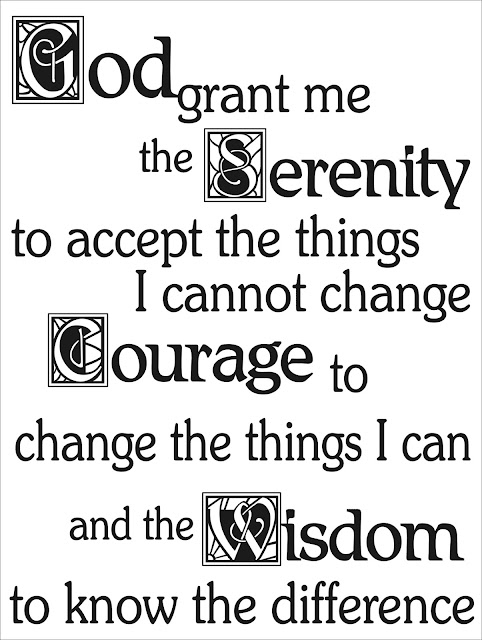
(2) reminding ourselves of Reinhold Niebuhr's Serenity Prayer:
Magnification or Minimization: This thinking habit occurs when the impact of an event, or our role in it is exaggerated. "Awfulizing" or "Catastrophizing" fall into this category. For example, if I'm having difficulty at work, but I tell myself that I am about to be fired, I am engaging in catastrophic thinking. To challenge this bad thinking habit, we need to ask ourselves, "What is an accurate, realistic description of my actions, or this event?" Talking about an event with others can be helpful, since they can often provide a third-party perspective to help us examine the situation rationally.
All-or-nothing thinking: This type of crooked thinking occurs when we think in absolute black or white terms, with no room for grays. I'm either perfect, or useless. Someone is either wonderful, or hopeless. The future is either heaven or hell. To move into a realistic framework, all-or-nothing thinkers need to look for middle ground where people and events are a mix of good and bad, positive and negative, helpful and unhelpful.
Mind Reading: When we engage in mind reading, we assume that we know what others are thinking, or what they need or want - usually to our detriment. For instance, going to a party and thinking people are not talking to you because they know you've just gained five pounds is taking the "mind reading" distortion to an absurdity. When we are guilty of mind reading, we need to remember to gather data and information from other people not to assume that we know what they are thinking.
Discounting the Positives: This thinking error occurs when the negative aspects of an event are attended to and the positive aspects are ignored. The phrase, "Seeing the glass half empty" speaks to this particular thinking habit. To break this thinking habit, we need to see events in their entirety, not to focus only on the negative aspects.
"Should / Ought / Must" thinking: When we engage in should/ought/must thinking we habitually set perfectionistic or unrealistic standards for ourselves and others. Statements such as, "My children should be more obedient" or "My husband ought to be more thoughtful" suggest that the current status quo is inadequate, thereby creating stress. To break this habit, we need to become more accepting of "what is" and set standards that can be realistically met.
"Blame" thinking: Blaming others or oneself for events that have occurred, whether or not this assignment of blame is accurate, is a common thinking error. It is premised on the belief that if something has gone wrong, someone must be responsible for it. But this is not always the case, or accurate accountabilities may be complex and inter-related. To alter this thinking habit, we need to be willing to take the time to understand how events occurred, and not immediately point fingers at others.
Negative Thought Diamond

Thought Samplers:
Steps for the "Daily Catch"
1. Recognize when you are participating in excessive negative thinking or experiencing excessive stress in your body.
2. Record the situation / events which triggered the negative thoughts or stress.
3. Record all Negative Thoughts that emerged (at least 4-6 thoughts).
4. Identify if these thoughts focus on self, other, future or the world.
5. For each Negative Thought, write down other, more reasonable response based on a clear, rational assessment of the facts (at least 3-4 responses for each negative thought).
Examples:
Triggering Event: My boss just called and asked about the progress of the last project he assigned.
Negative Thought: I should have had it done by now.
Focus of Negative Thought (Self, Others, World, Future): Self.
Reasonable Response: I have not done it by now, because there was no deadline on the project. | He told me other projects were priority right now. | I did complete significant pieces of it, so it'll be clear that I am dedicated and competent.
Negative Thought: He's so useless! He knows nothing at all about delegating!
Focus of Negative Thought (Self, Others, World, Future): Other
Reasonable Response: He asked about the "progress" - not if it's done.
Negative Thinking and Organizational Change: The Deadly Duo
Many of us experience "tough going" when we're surrounded by organizational change. A merger, a round of downsizing, changes in senior leadership - these all create enormous stress. Less extreme changes like getting a new IT system, or a new supervisor, count too! And most of us respond to these stressors by participating in negative thinking. When our means of earning a livelihood starts to shake, we react with fear. Thoughts such as "I'm going to loose my job", "I can't work with this new person" or "The end result of all these changes will be disaster" fill our minds and at times seem to swamp us.
So... if you're experiencing organizational change, take note! If a lot of people are impacted by the change, anticipate to see negativity in the work environment. But you don't have to be part of the problem. Use the Becoming Aware tool frequently to catch small negative thoughts as they pop up. Recognize the stress you're experiencing, and find ways to manage it that are more helpful than indulging in negative thinking. Maintain a proactive, flexible and patient attitude. Look for opportunities in the new changes. Be an exception to the rule, and react to workplace change positively. Decide to be part of the solution!
There's more than one way to...
When we get stuck in looking at an issue from only one perspective, our body reacts with by becoming stressed! Being able to see a situation from more than one perspective is a skill we can all develop to reduce our stress levels. In the book "Managing Your Mind", Butler and Hope offer the following list of questions to help us get better at seeing both the forest and the trees:
And last but not least - probably the most important - the key to positive outlook and happiness is always GRATITUDE.
Keep a GRATITUDE journal always near by and ensure to update it daily!
Related Resources:
www.Mandalacoach.com
www.lifepositive.com
www.meditationsociety.com
Stress is not an event that "happens to us". Our beliefs and perceptions of events are more important than the actual events in determining our level of stress.
When "Stress" occurs (EVENT) how do I typically react (INTERPRETATION)?
Do I react with a state of: Stress | Neutral | Positive
When we're in the "Stress Whirlpool" the cycle typically looks like this:

Crooked Thinking Habits
Many of us fall into the trap of 'Crooked Thinking'. This term refers to patterns of thought that increase our negativity, fears or worry levels, and as a result elevate our stress levels as well. Such patterns end up altering our view of ourselves and of the world around us.
It is important to note that all Crooked Thinking involves some form of distortion. A number of these distortions seem to be very common and are shared by many in Western society. The good news is that distorted thinking is simply a bad habit. And like any bad habit, one can eliminate or minimize the habit to a point where it no longer is a problem. The first step is to understand what Crooked Thinking actually is and what common distortions are present in most cases.
Here are some common forms of thought distortions. You can find more on these and other common thoughts distortions in any book written by Dr. David D. Burns.
Personalization: When we hold ourselves responsible for things over which we have little or no influence, or which have only a minimal connection to us, we are participating in personalization. For example, if a colleague is in a grumpy mood, it would be rational to ask ourselves, "What's going on that he's in such a bad mood?".
However, if we engage in the habit of personalizing, we ask, "What did I do?".
Two useful tools to break out of the crooked thinking pattern of personalization are:
(1) asking ourselves, "Does this realistically have anything to do with me?", and
(2) reminding ourselves of Reinhold Niebuhr's Serenity Prayer:

Magnification or Minimization: This thinking habit occurs when the impact of an event, or our role in it is exaggerated. "Awfulizing" or "Catastrophizing" fall into this category. For example, if I'm having difficulty at work, but I tell myself that I am about to be fired, I am engaging in catastrophic thinking. To challenge this bad thinking habit, we need to ask ourselves, "What is an accurate, realistic description of my actions, or this event?" Talking about an event with others can be helpful, since they can often provide a third-party perspective to help us examine the situation rationally.
All-or-nothing thinking: This type of crooked thinking occurs when we think in absolute black or white terms, with no room for grays. I'm either perfect, or useless. Someone is either wonderful, or hopeless. The future is either heaven or hell. To move into a realistic framework, all-or-nothing thinkers need to look for middle ground where people and events are a mix of good and bad, positive and negative, helpful and unhelpful.
Mind Reading: When we engage in mind reading, we assume that we know what others are thinking, or what they need or want - usually to our detriment. For instance, going to a party and thinking people are not talking to you because they know you've just gained five pounds is taking the "mind reading" distortion to an absurdity. When we are guilty of mind reading, we need to remember to gather data and information from other people not to assume that we know what they are thinking.
Discounting the Positives: This thinking error occurs when the negative aspects of an event are attended to and the positive aspects are ignored. The phrase, "Seeing the glass half empty" speaks to this particular thinking habit. To break this thinking habit, we need to see events in their entirety, not to focus only on the negative aspects.
"Should / Ought / Must" thinking: When we engage in should/ought/must thinking we habitually set perfectionistic or unrealistic standards for ourselves and others. Statements such as, "My children should be more obedient" or "My husband ought to be more thoughtful" suggest that the current status quo is inadequate, thereby creating stress. To break this habit, we need to become more accepting of "what is" and set standards that can be realistically met.
"Blame" thinking: Blaming others or oneself for events that have occurred, whether or not this assignment of blame is accurate, is a common thinking error. It is premised on the belief that if something has gone wrong, someone must be responsible for it. But this is not always the case, or accurate accountabilities may be complex and inter-related. To alter this thinking habit, we need to be willing to take the time to understand how events occurred, and not immediately point fingers at others.
Negative Thought Diamond


Thought Samplers:
- No one else seems to struggle the way I do.
- I just know we're destroying the ozone layer quicker than experts say, soon we'll have nothing left.
- Feeling like an outsider will always plague my life.
- My boss is making unreasonable demands.
- I'll never be able to get my life "together".
- No one loves me.
- The way things are today, kids don't have a future.
- The problem is so big, I won't be able to cope with it.
- She didn't really mean what she said, you can't trust anyone.
- No one ever helps me. They just don't care.
- I'm hopeless.
Steps for the "Daily Catch"
1. Recognize when you are participating in excessive negative thinking or experiencing excessive stress in your body.
2. Record the situation / events which triggered the negative thoughts or stress.
3. Record all Negative Thoughts that emerged (at least 4-6 thoughts).
4. Identify if these thoughts focus on self, other, future or the world.
5. For each Negative Thought, write down other, more reasonable response based on a clear, rational assessment of the facts (at least 3-4 responses for each negative thought).
Examples:
Triggering Event: My boss just called and asked about the progress of the last project he assigned.
Negative Thought: I should have had it done by now.
Focus of Negative Thought (Self, Others, World, Future): Self.
Reasonable Response: I have not done it by now, because there was no deadline on the project. | He told me other projects were priority right now. | I did complete significant pieces of it, so it'll be clear that I am dedicated and competent.
Negative Thought: He's so useless! He knows nothing at all about delegating!
Focus of Negative Thought (Self, Others, World, Future): Other
Reasonable Response: He asked about the "progress" - not if it's done.
Negative Thinking and Organizational Change: The Deadly Duo
Many of us experience "tough going" when we're surrounded by organizational change. A merger, a round of downsizing, changes in senior leadership - these all create enormous stress. Less extreme changes like getting a new IT system, or a new supervisor, count too! And most of us respond to these stressors by participating in negative thinking. When our means of earning a livelihood starts to shake, we react with fear. Thoughts such as "I'm going to loose my job", "I can't work with this new person" or "The end result of all these changes will be disaster" fill our minds and at times seem to swamp us.
So... if you're experiencing organizational change, take note! If a lot of people are impacted by the change, anticipate to see negativity in the work environment. But you don't have to be part of the problem. Use the Becoming Aware tool frequently to catch small negative thoughts as they pop up. Recognize the stress you're experiencing, and find ways to manage it that are more helpful than indulging in negative thinking. Maintain a proactive, flexible and patient attitude. Look for opportunities in the new changes. Be an exception to the rule, and react to workplace change positively. Decide to be part of the solution!
There's more than one way to...
When we get stuck in looking at an issue from only one perspective, our body reacts with by becoming stressed! Being able to see a situation from more than one perspective is a skill we can all develop to reduce our stress levels. In the book "Managing Your Mind", Butler and Hope offer the following list of questions to help us get better at seeing both the forest and the trees:
- What are the facts?
- Does my thinking fit the facts?
- Could I be making a mistake in how I'm thinking?
- Am I thinking straight?
- What other points of view are there?
- How would someone else (my partner, my boss, a friend...) think about this?
- What is the worst that can happen?
- What can I do if that worst case scenario happens?
- Who can help me with this situation?
And last but not least - probably the most important - the key to positive outlook and happiness is always GRATITUDE.
Keep a GRATITUDE journal always near by and ensure to update it daily!
Related Resources:
www.Mandalacoach.com
www.lifepositive.com
www.meditationsociety.com
3/11/2013
The Art of Execution: Passion to Action
Let's get down to business, and by business I mean: Gary Vaynerchuk
Youtube video of Gary Vaynerchuk via theARTof.com
Are you a hockey player playing soccer? And if so, are you the type to drop the stick and start dribbling or will step-out and go find a pond?
Wow, nothing like just getting right down to the point! Love it, thank you Gary!
Knowing WHO you are and WHAT drives you is indeed an important factor in life - that IS what life should be about; however like most of us know - it doesn't always workout that way. We live in a world where we build ourselves-up to become who we 'think' we should be and we end-up doing stuff we 'think' we should be doing... Yikes! All-this-while watching those who don't conform rise to the top!
Look at yourself in the mirror (as Gary explains), REALLY look at yourself and ... let's get honest here. If you can't be honest with yourself - and truly allow yourself "your" truth - then how do you expect it to ever become a reality.
Youtube video of Gary Vaynerchuk via theARTof.com
Are you a hockey player playing soccer? And if so, are you the type to drop the stick and start dribbling or will step-out and go find a pond?
Wow, nothing like just getting right down to the point! Love it, thank you Gary!
Knowing WHO you are and WHAT drives you is indeed an important factor in life - that IS what life should be about; however like most of us know - it doesn't always workout that way. We live in a world where we build ourselves-up to become who we 'think' we should be and we end-up doing stuff we 'think' we should be doing... Yikes! All-this-while watching those who don't conform rise to the top!
Look at yourself in the mirror (as Gary explains), REALLY look at yourself and ... let's get honest here. If you can't be honest with yourself - and truly allow yourself "your" truth - then how do you expect it to ever become a reality.
1/30/2013
How Peace, Love & Misunderstanding can Bring on Understanding
Here are more of my thoughts and review with regards to the movie: Peace, Love & Misunderstanding (2011)
My first blogpost regarding this movie can be accessed here:
http://tammymathieu.blogspot.ca/2013/01/choosing-to-judge-is-my-problem.html
This is a more in-dept follow-up.

My first blogpost regarding this movie can be accessed here:
http://tammymathieu.blogspot.ca/2013/01/choosing-to-judge-is-my-problem.html
This is a more in-dept follow-up.
I connected with the mother, in
a sense – but for me it was the resentment piece.
She resented her mother for
being who she was, carefree.
She didn’t want to understand
her mother’s way (the grandmother’s way);
And so blocked her out.
…and then at the end when she
goes to bail her out, and her mother explains (something like):
“Now that you have children and
know that love, how would you feel if one of them rejected you for 20 years?”
Ah-man that hit me in the gut.
We create our own judgements and
“interpretations” as to what’s ‘right (for us)’ – and then build our lives on
this “belief”.
What really happens – is all in
our heads – we ‘think’ everyone else should see and think the same way, and if
they don’t; then there’s something wrong with “them”.
The whole movie’s “message” (for
me) was about Judgement.
The daughter judging her mother,
and the mother judging her mother (the grandmother);
And the daughter judging the
butcher / boyfriend.
The husband judging the wife (at
the end when he states something like, I didn’t know you all had “that” kind
of fun).
And then the fun part of the
“message” was about “letting go”, that’s the [Peace, Love and
Misunderstandings].
We create judgement upon
ourselves by not “letting go”; we’re blocking our own truths.
Sure in the movie they included
drinking and drugs – and the whole “Hippy” lifestyle – but I think that “stuff”
was just marketing for Hollywood sales.
It just make things easier to
understand “quickly”, since the “Hippy” lifestyle is already a stereotype most
people know about.
Had they marketed the movie about
a Grandmother living a spiritual new-age lifestyle, would it have had the same
effect (and sales)??
Maybe some people really do live
that way, and maybe they don’t – again we’re not to judge, we’re just to choose
to love & understand. …we don’t need to do the same – we just need to “get
over our-self-made beliefs” and Let Go (of everything outside of us).
The carefree piece was a sight
of beauty (for me). Maybe at times, for the movie’s sake – it went overboard
(sex, drugs and …well extras!)
But the foundation for that
Grandmother was there – this was HER story, HER choices.
How many of us can claim to live
our choices, freely… really?
We don’t. And why? Because of
exactly this – we judged her choices and made them wrong.
And why…? She’s not us… and so
this IS the piece we need to Let Go.
This “meaning” is similar to
what the boy says at the end about judgement (having someone want to change
someone else): “that’s your problem” …and not hers. The Grandmother found her
“peace” and is choosing to live it. She understood what her daughter was going
through and knew she had some “releasing” to do, but ultimately she pretty much
just let her do her own thing and just “welcomed” her back into her life with Love.
How many of us could do this,
just welcome “lost” ones back into our lives with open arms – after the hurt
and abandonment? And to choose not to judge “them”…
There were several underlining
messages and I’m sure they spoke differently to each of us, and I’m sure the
“messages” get received very differently at different times in our lives.
I enjoyed it overall, and am
looking forward to hosting Feminine Full Moon Evenings! ;)
6/12/2012
The Five Agreements (Toltec Wisdom)
The Five Agreements:
1. BE IMPECCABLE WITH YOUR WORD Speak with integrity. Say only what you mean. Avoid using the word to speak against yourself or to gossip about others. Use the power of your word in the direction of truth and love.
2. DON’T TAKE ANYTHING PERSONALLY Nothing others do is because of you. What others say and do is a projection of their own reality, their own dream. When you are immune to the opinions and actions of others, you won’t be the victim of needless suffering.
3. DON’T MAKE ASSUMPTIONS Find the courage to ask questions and to express what you really want. Communicate with others as clearly as you can to avoid misunderstandings, sadness, and drama. With just this one agreement, you can completely transform your life.
4. ALWAYS DO YOUR BEST Your best is going to change from moment to moment; it will be different when you are tired as opposed to well rested. Under any circumstance, simply do your best, and you will avoid self-judgment, self-abuse, and regret.
5. BE SKEPTICAL, BUT LEARN TO LISTEN Don’t believe yourself or anybody else. Use the power of doubt to question everything you hear: Is it really the truth? Listen to the intent behind the words, and you will understand the real message.
The Four Agreements slowly helps you to recover your authentic self, and the real you starts to awaken. With The Fifth Agreement comes the complete acceptance of yourself just the way you are, and the complete acceptance of everybody else just the way they are. The reward is your eternal happiness. The Fifth Agreement is made with words, of course, but its meaning and intent is beyond the words. The Fifth Agreement is ultimately about seeing your whole reality with the eyes of truth, without words.
As Don Miguel says, “By practicing the Five Agreements, what you are really doing is respecting everything in creation. You are respecting your dream; you are respecting everybody else’s dream. If you use these tools, your effort is really for everyone, because your joy, your happiness, your peace, and your heaven are contagious. When you are happy, the people around you are happy too, and it inspires them to change their own world.”
The above was quoted from: http://in2deep.wordpress.com/2009/11/25/the-fifth-agreement/
About a year ago, a wise woman strongly suggested that I read The Fifth Agreement. However since I hadn’t read The Four Agreements by Don Miguel Ruiz, I started off with this book first. Once completed, and it was a fairly quick and easy read, I started venturing in to its sequel The Fifth Agreement by Don Miguel Ruiz and his son Don Jose Ruiz. Given that the original book was still fresh in my mind (having just finished reading it), I was able to scan-read ¾ of the book in order jump right in to the newer stuff – the fifth agreement teachings!
The Fifth Agreement which is “Be Skeptical, But Learn to Listen” brings us deeper, to another level of understanding, in our ‘dream’ world.
A quote from the book reads:
“When the truth sets you free, the symbols you learned are no longer ruling your world. Then it’s not about being right or wrong, or good or bad. It’s not about being a winner or loser. It’s not about being young or old, beautiful or ugly. All that is over. It was nothing but symbols.”
How much more in-depth can you get than that?
Our entire world, everything we know, we know because of how we perceive it; and how we perceive it - roots to how we were ‘domesticated’.
The words we use originated from somewhere, from someone. That someone, a human decided to call the warm puffy thing that just came out of the oven: bread. And this word “bread” - only captures its meaning in the language it’s made to be shared in. If I was to go to China, and say “bread”, the word only has meaning to me; so it’s not real. If I was to find bread and point to it, this is real – it’s there (the bread), however the words (symbols) used to identify things, aren’t. They’re created by people for agreement purposes.
Another meaning for symbols comes into play when describing things – let’s say a dandelion. If I was to describe the dandelion, the words that I use to associate to this object are rooted to my history and my perception of dandelions. I may think/believe they’re beautiful wild flowers, and that’s it. Meanwhile, someone else might not reference dandelions as objects of nature, but make note that dandelions have purposeful meaning in the medical field.
Which brings me to – judgement. Judgement can be a viewpoint perceived from what’s been ‘recorded’ in your mind… which brings forth the fifth agreement:
BE SKEPTICAL, BUT LEARN TO LISTEN Don’t believe yourself or anybody else. Use the power of doubt to question everything you hear: Is it really the truth? Listen to the intent behind the words, and you will understand the real message.
Is what’s in my mind truth? Is what I believe about something actually correct? Why do I think this way, why do I like (or dislike) something? …and is what I ‘perceive’ as ‘being right’ actually ‘right’? Aha, this then becomes the ‘real’ question… What is the truth?
The truth is the truth and there isn’t any need to reveal it because it will always be there, it’s the truth, thus there’s nothing to uncover. What’s not ‘truth’ is the fog over our eyes veiling our ‘dreams’; convincing us to conform to other people's interpretation of their truth.
Your truth, and my truth – may very well be the same, or maybe not; either way who’s to say we’re not both right? We both originate from the same source, our core ‘structure’ is the same – what is different is our ‘mind-recordings’, our beliefs.
Allowing yourself to listen and not believe, especially not believe yourself (your mind-chatter) – you come to learn to listen to meaning, to the words behind the words: The message.
This does indeed lead you to a talk-less / listen-more dream-style. Sometimes allowing our mind-chatter to come to life with words, influences more mind-chatter to be created; and this is when we need to revert back to agreement #1:
BE IMPECCABLE WITH YOUR WORD Speak with integrity. Say only what you mean. Avoid using the word to speak against yourself or to gossip about others. Use the power of your word in the direction of truth and love.
We’re all one. Our core energies and mind-intentions are intertwined. Which is why/how we’re here right now. Our combined efforts bring together awareness and openness – which alone can be done, and is being done – however togetherness allows us quicker truth awareness.
Change your world, and the world around you changes.
The truth doesn’t need to be forced upon anyone, people will get it when they need it, and they’ll get what they need when it’s needed. …because if we recall: The truth is the truth and there isn’t any need to reveal it.
When the student is ready, the teacher appears.
Opening your awareness and allowing yourself to view things outside the norm is living the fifth agreement. Stop the mind chatter, don’t believe what you believe, and question everything around you -- so that you can get the real message / meaning being presented to you.
On that note, how are you messaging? What kind of messenger are you?
View an excerpts of the book The Fifth Agreement here:
http://www.amazon.com/The-Fifth-Agreement-Practical-Self-Mastery/dp/1878424688#reader_B00352B41E
http://www.selfgrowth.com/articles/the_fifth_agreement_book_excerpt
Video from HayHouse:
1. BE IMPECCABLE WITH YOUR WORD Speak with integrity. Say only what you mean. Avoid using the word to speak against yourself or to gossip about others. Use the power of your word in the direction of truth and love.
2. DON’T TAKE ANYTHING PERSONALLY Nothing others do is because of you. What others say and do is a projection of their own reality, their own dream. When you are immune to the opinions and actions of others, you won’t be the victim of needless suffering.
3. DON’T MAKE ASSUMPTIONS Find the courage to ask questions and to express what you really want. Communicate with others as clearly as you can to avoid misunderstandings, sadness, and drama. With just this one agreement, you can completely transform your life.
4. ALWAYS DO YOUR BEST Your best is going to change from moment to moment; it will be different when you are tired as opposed to well rested. Under any circumstance, simply do your best, and you will avoid self-judgment, self-abuse, and regret.
5. BE SKEPTICAL, BUT LEARN TO LISTEN Don’t believe yourself or anybody else. Use the power of doubt to question everything you hear: Is it really the truth? Listen to the intent behind the words, and you will understand the real message.
The Four Agreements slowly helps you to recover your authentic self, and the real you starts to awaken. With The Fifth Agreement comes the complete acceptance of yourself just the way you are, and the complete acceptance of everybody else just the way they are. The reward is your eternal happiness. The Fifth Agreement is made with words, of course, but its meaning and intent is beyond the words. The Fifth Agreement is ultimately about seeing your whole reality with the eyes of truth, without words.
As Don Miguel says, “By practicing the Five Agreements, what you are really doing is respecting everything in creation. You are respecting your dream; you are respecting everybody else’s dream. If you use these tools, your effort is really for everyone, because your joy, your happiness, your peace, and your heaven are contagious. When you are happy, the people around you are happy too, and it inspires them to change their own world.”
The above was quoted from: http://in2deep.wordpress.com/2009/11/25/the-fifth-agreement/
About a year ago, a wise woman strongly suggested that I read The Fifth Agreement. However since I hadn’t read The Four Agreements by Don Miguel Ruiz, I started off with this book first. Once completed, and it was a fairly quick and easy read, I started venturing in to its sequel The Fifth Agreement by Don Miguel Ruiz and his son Don Jose Ruiz. Given that the original book was still fresh in my mind (having just finished reading it), I was able to scan-read ¾ of the book in order jump right in to the newer stuff – the fifth agreement teachings!
The Fifth Agreement which is “Be Skeptical, But Learn to Listen” brings us deeper, to another level of understanding, in our ‘dream’ world.
A quote from the book reads:
“When the truth sets you free, the symbols you learned are no longer ruling your world. Then it’s not about being right or wrong, or good or bad. It’s not about being a winner or loser. It’s not about being young or old, beautiful or ugly. All that is over. It was nothing but symbols.”
How much more in-depth can you get than that?
Our entire world, everything we know, we know because of how we perceive it; and how we perceive it - roots to how we were ‘domesticated’.
The words we use originated from somewhere, from someone. That someone, a human decided to call the warm puffy thing that just came out of the oven: bread. And this word “bread” - only captures its meaning in the language it’s made to be shared in. If I was to go to China, and say “bread”, the word only has meaning to me; so it’s not real. If I was to find bread and point to it, this is real – it’s there (the bread), however the words (symbols) used to identify things, aren’t. They’re created by people for agreement purposes.
Another meaning for symbols comes into play when describing things – let’s say a dandelion. If I was to describe the dandelion, the words that I use to associate to this object are rooted to my history and my perception of dandelions. I may think/believe they’re beautiful wild flowers, and that’s it. Meanwhile, someone else might not reference dandelions as objects of nature, but make note that dandelions have purposeful meaning in the medical field.
Which brings me to – judgement. Judgement can be a viewpoint perceived from what’s been ‘recorded’ in your mind… which brings forth the fifth agreement:
BE SKEPTICAL, BUT LEARN TO LISTEN Don’t believe yourself or anybody else. Use the power of doubt to question everything you hear: Is it really the truth? Listen to the intent behind the words, and you will understand the real message.
Is what’s in my mind truth? Is what I believe about something actually correct? Why do I think this way, why do I like (or dislike) something? …and is what I ‘perceive’ as ‘being right’ actually ‘right’? Aha, this then becomes the ‘real’ question… What is the truth?
The truth is the truth and there isn’t any need to reveal it because it will always be there, it’s the truth, thus there’s nothing to uncover. What’s not ‘truth’ is the fog over our eyes veiling our ‘dreams’; convincing us to conform to other people's interpretation of their truth.
Your truth, and my truth – may very well be the same, or maybe not; either way who’s to say we’re not both right? We both originate from the same source, our core ‘structure’ is the same – what is different is our ‘mind-recordings’, our beliefs.
Allowing yourself to listen and not believe, especially not believe yourself (your mind-chatter) – you come to learn to listen to meaning, to the words behind the words: The message.
This does indeed lead you to a talk-less / listen-more dream-style. Sometimes allowing our mind-chatter to come to life with words, influences more mind-chatter to be created; and this is when we need to revert back to agreement #1:
BE IMPECCABLE WITH YOUR WORD Speak with integrity. Say only what you mean. Avoid using the word to speak against yourself or to gossip about others. Use the power of your word in the direction of truth and love.
We’re all one. Our core energies and mind-intentions are intertwined. Which is why/how we’re here right now. Our combined efforts bring together awareness and openness – which alone can be done, and is being done – however togetherness allows us quicker truth awareness.
Change your world, and the world around you changes.
The truth doesn’t need to be forced upon anyone, people will get it when they need it, and they’ll get what they need when it’s needed. …because if we recall: The truth is the truth and there isn’t any need to reveal it.
When the student is ready, the teacher appears.
Opening your awareness and allowing yourself to view things outside the norm is living the fifth agreement. Stop the mind chatter, don’t believe what you believe, and question everything around you -- so that you can get the real message / meaning being presented to you.
On that note, how are you messaging? What kind of messenger are you?
View an excerpts of the book The Fifth Agreement here:
http://www.amazon.com/The-Fifth-Agreement-Practical-Self-Mastery/dp/1878424688#reader_B00352B41E
http://www.selfgrowth.com/articles/the_fifth_agreement_book_excerpt
Video from HayHouse:
6/08/2012
Sometimes Your Job is to Just Keep Playing!
Washington Post story posted back on April 8, 2007 - Pearls Before Breakfast
http://www.washingtonpost.com/wp-dyn/content/article/2007/04/04/AR2007040401721.html
A friend of mine shared this story with me this morning, she shared the "summarized" version which was shared/posted by Roni Sloman of Bella Prana Yoga and Meditation:
Blogpost: http://www.bellaprana.com/blog/view/29-itsnotallaboutme
What a beautiful story, a beautiful lesson.
Learn to Stop to Smell the Roses gains a whole new meaning.
And I love Roni's quote: "Remember that sometimes your job is just to play."
Thank you all for this beautiful learning. When I spot, hear, taste, smell, whatever... it is that is beautiful to me, I hope to capture that moment in appreciation and consume it's value in my soul.
http://www.washingtonpost.com/wp-dyn/content/article/2007/04/04/AR2007040401721.html
A friend of mine shared this story with me this morning, she shared the "summarized" version which was shared/posted by Roni Sloman of Bella Prana Yoga and Meditation:
Blogpost: http://www.bellaprana.com/blog/view/29-itsnotallaboutme
The Violinist
A man sat at a metro station in Washington DC and started to play the violin; it was a cold January morning. He played six Bach pieces for about 45 minutes. During that time, since it was rush hour, it was calculated that thousands of people went through the station, most of them on their way to work. A couple people stopped for a moment then seemingly unimpressed hurried off clearly late for work.
One lady threw in a dollar tip on her way by but didn't stop. The one who paid the most attention was a 3 year old boy. His mother tagged him along hurried, but the kid stopped to look at the violinist. This action was repeated by several other children. All the parents, without exception, forced them to move on. In the 45 minutes the musician played, only 6 people stopped and stayed for a while. About 20 gave him money but continued to walk their normal pace. He collected $32. When he finished playing and silence took over, no one noticed it. No one applauded, nor was there any recognition. No one knew this but the violinist was Joshua Bell, one of the top musicians in the world. He played one of the most intricate pieces ever written, with a violin worth 3.5 million dollars. Two days before his playing in the subway, Joshua Bell sold out at a theater in Boston and the seats average $100.This is a true story. Joshua Bell playing incognito in the metro station. One of the world most accomplished musicians, playing one of the most difficult pieces of music ever written, on a violin worth millions and thousands of people passed by without a single turn of the head.
Story experts from www.MrPositive.comAfter reading this story - all that came to mind, was wow!
I told that story in the context of not taking things personally because that story helps illustrate the fact that people will react to things and behave based on their current reality, their expectations of a certain environment, and their own definition of what is good and bad. There will be many moments in our lives where we will be Joshua Bell in the subway. Where you will be a priceless gem and no one will notice. Where you will produce incredible things, and no one will seem to care. Where you will be holding something of indescribable value and no one will even look. But like that experiment in the subway, just because no one cared didn't mean it wasn't priceless, incredible, and indescribably valuable. Joshua Bell knew as he played that he was being undervalued, and you will know it too. So in those moments what do you do? You keep playing. We cannot love ourselves only if others love us, and we cannot hate ourselves because others say they hate us. Don't take others reactions to you too personally. Don't make every situation about you. They are often reacting to themselves and their environment more than they are reacting to you. Remember that sometimes your job is just to play.
- Roni Sloman
What a beautiful story, a beautiful lesson.
Learn to Stop to Smell the Roses gains a whole new meaning.
And I love Roni's quote: "Remember that sometimes your job is just to play."
Thank you all for this beautiful learning. When I spot, hear, taste, smell, whatever... it is that is beautiful to me, I hope to capture that moment in appreciation and consume it's value in my soul.
4/25/2011
Stop, Challenge, and Choose.
Personal Development and exploration always fascinates me - I love learning how my personality,my upbringing, my habits, my beliefs, my assumptions... all of it work together. These synergies all interconnected make me who I am today, right now.

the authors explains:
So how are YOU being reflected throughout the universe?
If I'm self-indulging for my future, what mentor-ship role am I providing to my surroundings?
As each moment passes by, I'm absorbing new things - however my mind only keeps what it "believes" I want it to keep; Thus choosing to live conscientiously is initially a challenge since you have to "be awake" continuously to your mind's activity... you have to tell it "yes" or "no" to what's going on around you.
For example - You drive (or ride) to work, typically the same way everyday.
Since you've driven this route, probably hundreds of times, your mind doesn't really pay attention to its 'surroundings' all that much (unless of course there's something completely new or out of the norm).
You're on autopilot.
I'm not saying that you're not paying attention to the road per-say - just saying that you might not be noticing as much of what's going on around you. Your brain probably is going to take this time to have you think about what to make for supper; did you lock the door when you left; do you have to pick up anything on your way back home; did you remember to bring your lunch; etc...
Choosing to live 'awake' forces you during 'these' moments to 'come back to reality'.
Force yourself to not go into autopilot-mode and to live 'in the now'.
Take a look around you and give appreciation to everything...
Be thankful that your alive.
Be thankful that you have a job.
Be thankful that you have a way to get to work.
Be thankful of what you have.
Be thankful that you're able to see, hear, taste and speak.
Be thankful that you're conscientious enough to be grateful for this moment.
We live in a world that's so fast-pace and perfection-oriented. We want everything yesterday and we want the latest and greatest in perfect condition and it better-be better then my neighbours'!
...all this and for what? Who are we trying to "beat", who we trying to please?
Choosing to live a simpler life, acknowledging your current state and be grateful for each passing moment is the greatest success of life. You are where you are supposed to be, right now; doing exactly what you are meant to be doing, right now. This is where you'll learn what you need to know, right now.
Each moment is a new moment. It's a new time. It's a new experience.
You can make each of these moments new, again - as long as you stay 'awake' to each and every moment granted to you. I'm not saying this is easy - I'm saying that this is your challenge.
“I’m not telling you it’s going to be easy – I’m telling you it’s going to be worth it.” – Art Willams
Choosing to make each moment YOUR moment; by not allowing your mind to rob you of them and set you on autopilot, will have you gain a whole new perspective of time, of life.
When you sit on your couch in the evening and feel like you've accomplished nothing - start jotting down your daily activities and you'll come to realize that you did accomplish a lot.
Gain new appreciations for your moments by allowing yourself the time to be grateful for them.
Saying "Thank You" repeatedly out loud tells your brain that, "This IS ok - I am allowed to enjoy this moment and not have to think about what needs to get done..."
How can you enjoy moments, this moment, if you don't 'give' yourself permission to enjoy them?
Where is this guilt coming from? Why am I not allowed to do nothing, to think about nothing...
Does this mean I'm unworthy? I'm a slacker? I don't deserve this time and if I take it, it'll be time wasted...
In the book Play to Win! by Larry Wilson & Hersch Wilson -
Larry Wilson, Hers...
the authors explains:
"...Stop, Challenge, and Choose is the fundamental skill to use to stay on plan. When you do not feel positive (or at least neutral) about where you are going or you are being pulled backwards, stop and ask yourself: Is this choice, is this feeling, helping me or hurting me in my pursuit toward a goal or action plan? Challenge your irrational thinking. Choose to stay on course.
Persistence is no doubt one of the most valuable attributes in making progress toward a goal. Stop, Challenge, and Choose is a tool of persistence. It is best used to intervene as we lose focus on our plan or to help us assure that one of the eighty-three problems doesn't become a barrier that is impossible to cross.
A Strategy to change. The powerful incantation "I choose". A commitment to do whatever it takes. Under the laws of life in our universe, this is how we create the highest probability of creating the results we want. It might be difficult, but it is rarely impossible. Don't let difficulty stop you, because it is from doing difficult things that we truly grow. It is from doing difficult things that we call out our ability to play to win."Stop, Challenge and Choose.
Stop listening to your autopilot 'voice'. That voice is your sub-conscience mind bringing forward to you past "files" that it thinks you should believe / listen to. These "files" are things that you've always done; things that have happened around you that you've come to accept; things that you (believe / feel / think) are right (or used to be right?); etc... all of these "files" are stored somewhere and come out when opportunities present themselves.
So when you're taking a shower you have a preference as to how you like to wash your hair - this had to have come from somewhere, right?
When you go to bed you might have a routine or preferred side or something - again this had to have come from somewhere...
All of these 'patterns' are your mind's way of confirming it's "files". When you keep doing the same things you are programming your mind in believing what you are doing is right. So that's where / when you do something different, out of pattern, your entire being "feels wrong" - this is because you're not following your mind's pattern of 'rights'. It may or may not be right or wrong but just because it's out of the ordinary, it just feels wrong.
Habits / Patterns aren't necessarily good or bad - they're just ways for us to do things 'quicker' and/or provide us with some type of 'comfort' (a known way). "Just fits me". "Just feels right." "Just because." "I can't change." "I'm too scared."
Choosing to live 'awake' has you awaken each of these habits/pattern moments and ask yourself:
Why am I doing this?
Do I really need to do this (this way)?
Is this the only way?
What would happen if I changed this?
This is called: Stop.
You've stopped your autopilot-mode and have chosen to re-evaluate your mind "file" in regards to this particular habit/pattern. Is this "file" in my mind, right or wrong? Do I want to change it?
Several of these questions and "habit" shifting techniques are examined in Dr. Wayne Dyer's book Excuses Begone!

Wayne Dyer
Now you are ready to work: Challenge.
Where does this "file" come from?
Is it something I learnt? Does it even provide any value?
What is it that I think / feel about this habit / pattern?
Why do I think / feel this way about (it)?
Can I, Should I, be changing this way of thinking / feeling?
And then comes the next step: Choose.
Here you get to conscientiously choose what YOU want to "file" vs. having your mind auto-pickup what it "thinks/believes" you want it to record. And just like any other habit/pattern this will require some conscientious awakening and willpower since you are re-writing your brain's mental notes.
All-in-all countless studies and experiments have proven these basic strategies to work.
You are in complete control of your life and CAN determine your outcomes, as long as you CHOOSE to "stay awake" to life's journey (every moment) and continuously challenge your choices.
Just because I choose to do something different today (now) doesn't mean that in 2 years from now it'll be the same right choice for me then... When I'm there (in the future) I'll know better what'll be best for me.
If I choose to use-up my now time thinking about my future, then I'm NOT now living my now; I'm auto-piloting.
What good am I to my now surroundings if I'm too busy preparing for my tomorrow?
I'm missing out on my now.
So how are YOU being reflected throughout the universe?
If I'm self-indulging for my future, what mentor-ship role am I providing to my surroundings?
...Could I be programming my children's minds to start auto-piloting?
"...Live life at a fast-pace and always try to be perfect.Continuously prepare for tomorrow cause today is too late - it's almost over.Don't bother with anyone or anything cause they're not worth it.Don't give back - and take whatever you can - cause you deserve everything, they owe you.Everyone owes you. No one understands and don't even bother trying to explain things to them - they won't t get it.."
Wow, isn't that a nasty message to add to your mental notes.
Is this what you truly believe to be true?
...I didn't think so -
Instead, how about we record in our minds:
"Live life now. Life is happening now.Look around you and say 'Thank You' for everything, for everyone....Be grateful for what you have and for who you are - right now, at this very moment.
Nothing will ever be perfect - because you are already perfect. You're as perfect as you need to be today, right now.
Observe what goes on around you, meanwhile in your mind, stay awake and conscientiously CHOOSE what to "keep" and what to "reject" - with regards to everything happening around you. Don't allow your mind to do this for you. Just make sure to record "what's right for you" in YOUR mind.[...cause whatever is happening COULD be RIGHT in someone else's mind (for them)...This is where you'll STOP, and ask yourself those questions - then Challenge your responses and finally CHOOSE which mental notes you wish to record in your "files". Take Control of your life.]
Decide to be the change you want to see in the world and take action on those changes. Don't just be, just because.
You were important enough to be given life - and you made it until now...that's because you have a purpose, you are the purpose.
Give back to life what it's given you - Love & Faith.Life loves you for who you are and has complete Faith in you - You can do this!"
Every morning when you wake up and need that little boost of inspiration -
reach for this short poem by Emily Matthews,
stand in front of a mirror and read out loud to yourself:
For a Special Friend
Lord bless my friend for all the things she takes the time to do,
The thoughtfulness she puts behind each act of kindness, too.
Bless her for the loving way she brightens many days
With caring and encouragement, and compliments and praise.
Bless her for her faith in me, her words that help me grow -
For being just the dearest friend I think I'll ever know.
~ Emily Matthews ~
Allow yourself to be loved, to feel love, and to love - Full Circle.
...and make sure to include the: love yourself in there too!
What goes around, comes around. Acceptance is key.
What goes around, comes around. Acceptance is key.
4/04/2011
How Is the Web Changing The World?
A colleague of mine recommended that I view the BBC Documentary entitled The Virtual Revolution. It took me sometime before I was able to set some time aside to sit back and take time to view this - and wow was I amazed! This master piece of research provides various ins & outs viewpoints of the World Wide Web - some of which I didn't even know about, and I'm an Information Technologist (IT) Professional.
It's amazing and wonderful how so many professions need to be combined together to really bring forward the realities and truths about whatever subject is chosen. Here the BBC did just that - it brought together: researchers; creators; politicians; activists; and so many more - all together to collaborate their thoughts and opinions on what exactly is the World Wide Web (www) and how it's changing the world.
Enjoy the learning!
Here's a quick peek at some of the available videos from the documentary - to learn more view the links below.
These video-series are from Episode 1 of the Documentary:
Programme 1: The great levelling?
The wonder and walls of Wikipedia; the blogger media revolution; who really has power on the web? Is it the online crowd or the 'gatekeepers'?
Episode 1 - Part 1:
Episode 1 - Part 2:
Episode 1 - Part 3:
Episode 1 - Part 4:
Episode 1 - Part 5:
Episode 1 - Part 6:
Episode 2 of the documentary can be viewed here:
Programme 2: Enemy of the state?
As the web transcends the barriers of the physical world the orthodox view is that the nation state will inevitably wither as a porous web of hyperlinks conquers the globe.
Videos:
Episode 2 - Part 1: http://www.youtube.com/watch?v=RFeJaEhUGs8
Episode 2 - Part 2: http://www.youtube.com/watch?v=N4cvwif1AGQ
Episode 2 - Part 3: http://www.youtube.com/watch?v=RqesGryXoo4
Episode 2 - Part 4: http://www.youtube.com/watch?v=APTtOVTm_Jc
Episode 2 - Part 5: http://www.youtube.com/watch?v=Yj4OtguOH9E
Episode 2 - Part 6: http://www.youtube.com/watch?v=8sH4HHiMNko
Episode 4 of the documentary can be viewed here:
Are we empowered, connected and enlightened with the worlds knowledge our finger tips? Is the web really changing us- the way we think, behave, and relate to each other.
Below is an explanation as to how you can navigate the BBC Documentary in 3D online and get a whole-lot more knowledge out of your experience:
To experience this 3D view - visit this section of the site: http://www.bbc.co.uk/virtualrevolution/3dexplorer_start.shtml
It's amazing and wonderful how so many professions need to be combined together to really bring forward the realities and truths about whatever subject is chosen. Here the BBC did just that - it brought together: researchers; creators; politicians; activists; and so many more - all together to collaborate their thoughts and opinions on what exactly is the World Wide Web (www) and how it's changing the world.
Enjoy the learning!
Here's a quick peek at some of the available videos from the documentary - to learn more view the links below.
These video-series are from Episode 1 of the Documentary:
Programme 1: The great levelling?
The wonder and walls of Wikipedia; the blogger media revolution; who really has power on the web? Is it the online crowd or the 'gatekeepers'?
Episode 1 - Part 1:
Episode 1 - Part 2:
Episode 1 - Part 3:
Episode 1 - Part 4:
Episode 1 - Part 5:
Episode 1 - Part 6:
Episode 2 of the documentary can be viewed here:
Programme 2: Enemy of the state?
As the web transcends the barriers of the physical world the orthodox view is that the nation state will inevitably wither as a porous web of hyperlinks conquers the globe.
Videos:
Episode 2 - Part 1: http://www.youtube.com/watch?v=RFeJaEhUGs8
Episode 2 - Part 2: http://www.youtube.com/watch?v=N4cvwif1AGQ
Episode 2 - Part 3: http://www.youtube.com/watch?v=RqesGryXoo4
Episode 2 - Part 4: http://www.youtube.com/watch?v=APTtOVTm_Jc
Episode 2 - Part 5: http://www.youtube.com/watch?v=Yj4OtguOH9E
Episode 2 - Part 6: http://www.youtube.com/watch?v=8sH4HHiMNko
Episode 3 of the documentary can be viewed here:
Free service, limitless information, endless opportunity for the user... the web seems to defy all the laws of economics. But are we all aware of how much we are trading our privacy for a free web? Videos:
Episode 3 - Part 1: http://www.youtube.com/watch?v=F5ShMZ0Xy2Q
Episode 3 - Part 2: http://www.youtube.com/watch?v=qr90i9q7iXI
Episode 3 - Part 3: http://www.youtube.com/watch?v=ECLBQfLwD0s
Episode 3 - Part 4: http://www.youtube.com/watch?v=Jg5E9Y5rH5I
Episode 3 - Part 5: http://www.youtube.com/watch?v=OMo2B4ILzik
Episode 3 - Part 6: http://www.youtube.com/watch?v=lHrhLgO86zo
Episode 4 of the documentary can be viewed here:
Are we empowered, connected and enlightened with the worlds knowledge our finger tips? Is the web really changing us- the way we think, behave, and relate to each other.
Videos:
Episode 4 - Part 1: http://www.youtube.com/watch?v=z5v4q9_cVCY
Episode 4 - Part 2: http://www.youtube.com/watch?v=rkxdn7LsQH0
Episode 4 - Part 3: http://www.youtube.com/watch?v=0-9JVI8pCfQ
Episode 4 - Part 4: http://www.youtube.com/watch?v=9u03HeXOK_Y
Episode 4 - Part 5: http://www.youtube.com/watch?v=P15WqDKlvwo
Episode 4 - Part 6: http://www.youtube.com/watch?v=_RZ218o7AjI
Below is an explanation as to how you can navigate the BBC Documentary in 3D online and get a whole-lot more knowledge out of your experience:
To experience this 3D view - visit this section of the site: http://www.bbc.co.uk/virtualrevolution/3dexplorer_start.shtml
Subscribe to:
Posts (Atom)
Tips for Hanging Picture Frames and Framed Art
To See Visual Examples and Explore more options, visit my one of my Pinterest boards: http://pinterest.com/tammymathieu General Hang...

-
 In reading the book Hero Within - Rev. & Expanded Ed.: Six Archetypes We Live By, by Carol Pearson http://books.google.ca/books/abou...
 -
 I received this poem from a friend of mine today and thought it was so beautiful - so I added some pizzazz to it by super-imposing it on to ...
 -
 Some of you, you probably heard me talking about going to Arizona (for the 2013 Heritage Makers Conference) and… then changing my mind and...